Before I started writing Elizabeth of Rosepath in 2018, I really didn’t know all that much about medieval Europe. I had a general sense of the era as conveyed via movies and the occasional book, but certainly not enough to write about it with any degree of confidence. Yet the time period fascinated me. It wasn’t because of a particular historical figure, event, or country, but rather the broader tapestry of day-to-day life that coloured the average person’s existence.
That’s why I cheated somewhat by setting The Book of Roses in a fictional medieval kingdom, a place divorced from time and geography that evoked an accurate feeling of medieval life, if not a historically specific version of it. I wanted the reader to feel like a person living in that time period, not someone looking back from the future with hindsight. History is its own greatest spoiler in that regard. As a result, my process is probably closer to something a low fantasy author might employ, more George R. R. Martin than Ken Follett.
There are two main approaches I take to research: one is on-the-fly research, the other is background reading. I tend to do more of the former than the latter these days, but a degree of general knowledge about the time period is still important before you start. If you don’t know the difference between a duke and a baron, a peasant and a serf, or a smith and a tanner, then it’s going to be difficult to portray a convincing facsimile of medieval life.
My on-the-fly research mainly consists of searching for answers to questions that occur to me as I write. When I was working on Mender of Monsters, I thought it would be fun to have a character who tended bees for the nunnery. When I think of beekeepers, I imagine people in full-body suits using machines to puff smoke into hives made from layered wooden frames. Immediately, that image creates some anachronisms when you transplant it into a medieval setting. How were medieval beehives made? What did the beekeepers wear? Did they also use smoke to calm the bees? How did they harvest and purify the honey?
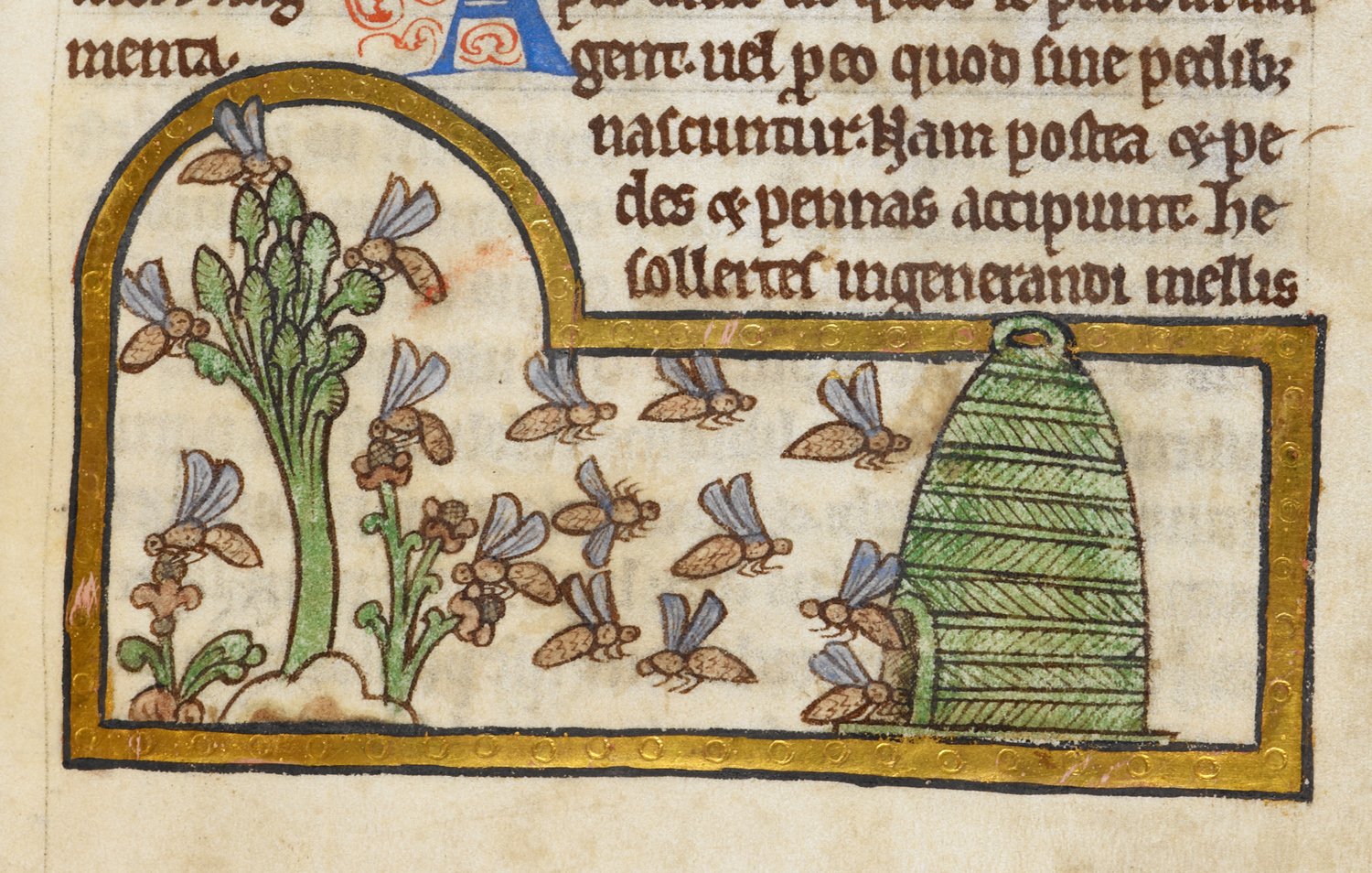
These were all questions I found myself asking as I considered how to incorporate the beekeeper character into my story. Thankfully we live in the age of Google where a thousand different libraries are just a few keystrokes away, yet we all know not to believe everything we read online. As my university tutors once taught me, general knowledge sites like Wikipedia can provide a good starting point, but they should never be taken as gospel. You should always look for multiple sources. Typically, I seek out videos, academic articles, snippets of books, and corroborating posts from discussion boards that form a general consensus. Since I’m creating works of fiction whose primary purpose is to entertain, I don’t stress too much over perfect historical accuracy, but I do like to establish confidence that my medieval world is at least a plausible representation of European society from somewhere between the years of 1100-1300 AD.
That idea of plausibility is key to my research process. History is a messy thing, full of conflicting accounts, unreliable scholars, contentious interpretations, and large voids of information that we’ll simply never know. It is almost impossible to write fiction about any past time period without some degree of guesswork or embellishment to fill in the blanks. Sticking with the bees, there is a scene in Mender of Monsters during which my beekeeper uses a wooden screw press to extract honey from its comb. This exact process was not something I could find a historical source for, yet my research did tell me that honey was extracted from comb by pressing, and that mechanical devices like the screw press did exist in Europe during the medieval era (it dates all the way back to the first century, in fact!). With that in mind, it made perfect sense to me that a nun might employ a simple screw press to squeeze honey. It might not be a formal or widespread practice, but it’s eminently plausible as a solution someone might come up with using the tools they had on hand.
That, to me, is the essence of what makes historical fiction compelling: seeing characters find solutions to their problems without the benefit of modern conveniences. This is why one of my favourite research sources comes in the form of videos chronicling people replicating historical techniques in the modern day. It’s all very well to read about something, but when you see someone actually doing it with the tools and knowledge that would have been available to our ancestors, it gives you far more confidence in its accuracy.
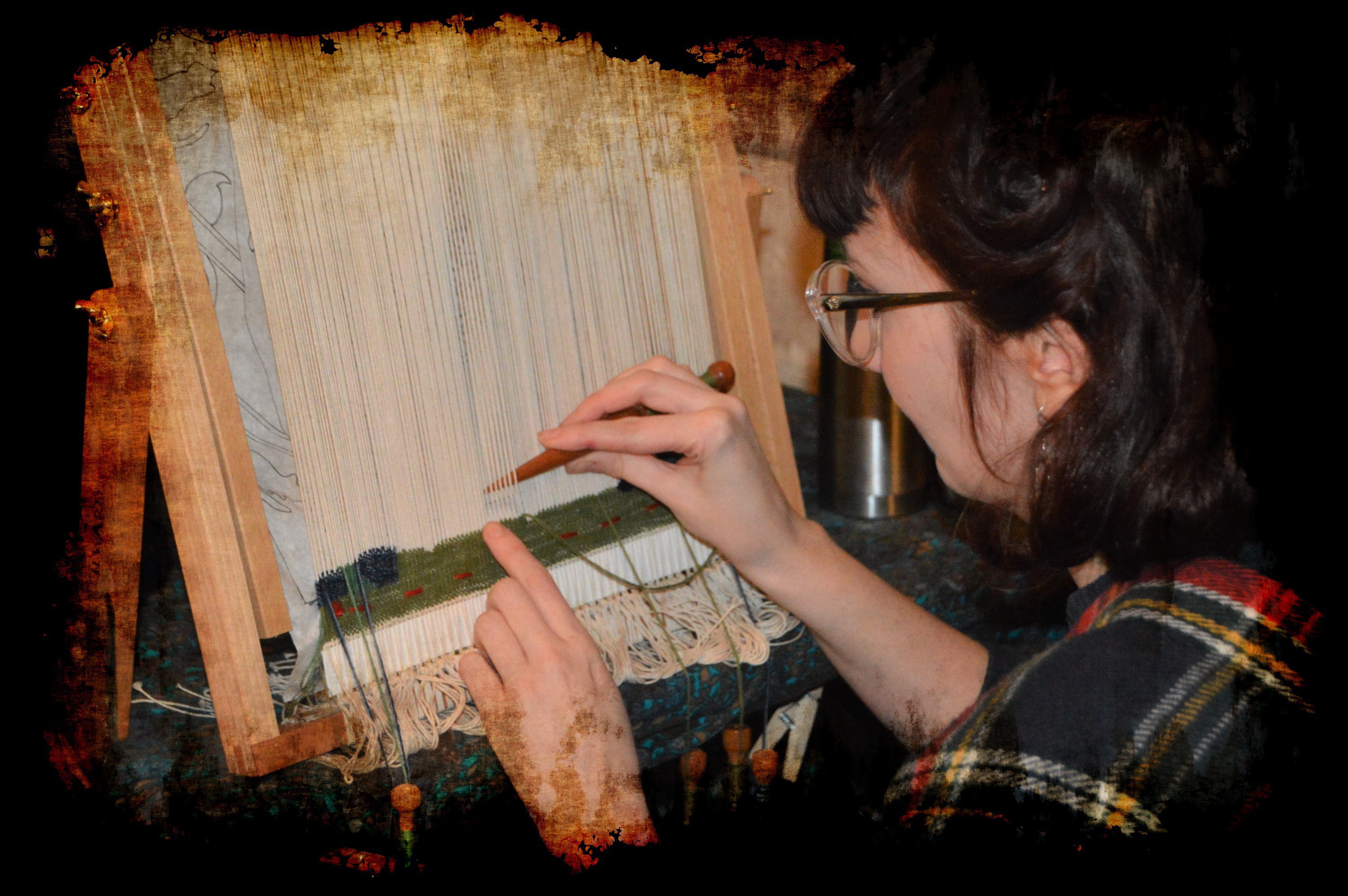
When I was writing Calia’s Needle, I spent a lot of time researching medieval tapestry weaving. This was quite difficult. While there is plenty of information out there about broader historical weaving techniques, I struggled to find accounts of how a medieval weaver might actually spend their day working on a tapestry. My salvation came in the form of a short documentary about a modern studio working to produce tapestries using historical techniques. They weren’t doing things the medieval way; their setup was closer to something from the 1600s, yet there was enough overlap for me to picture in my mind’s eye how a weaver might have worked a medieval loom using the tools available in that era.
The beauty of writing about the distant past is that few practices were strictly formalised back then. Even within cultures, the way people did things often varied wildly. Without broadly accessible repositories of knowledge like schools and libraries, most learning was oral. Every master might have their own techniques and eccentricities, and there were fewer regulations that bound workers to a uniform code of conduct. This is one of the little details of historical fiction that opens up a compelling space for creativity. Using the structure of research to create a scaffold for a setting with a few unique (but believable) quirks has a certain paint-by-numbers quality to it that offers just enough room to colour outside the lines.
The second part of my research process is probably the more familiar one. While most of the time I write until something (like a beekeeper) makes me pause to scratch my head, there are some questions about historical life that will just never occur to you if left to your own devices. There’s no accounting for some of the weird and wonderful things people believed about medicine in the middle ages, making a meal of hedgehogs baked in clay is not a thought that would’ve leapt into my head before I read about it, and why did medieval artists always draw snails so weirdly?
These are the sorts of things you’re only going to pick up on if you take the time to read books and watch documentaries with no specific research goal in mind. They jump out at you like diamonds in the rough. Most of the time, they’re just fun details you can pepper in to flavour a scene, but occasionally they form the basis for a genuinely engrossing storyline. If you’d told me ten years ago about how absolutely wild the scandals and politics of medieval convents were, I wouldn’t have believed it. Life is often far stranger than fiction, and history is full of dormant nonsense that’s just waiting to inspire a writer’s next storyline.
To finish off this post, there are a few little research anecdotes I wanted to talk about that illustrate some of the problems and solutions I’ve run into while writing my books.
One of the first locations I describe in Elizabeth of Rosepath is Rosepath Castle. Obviously, I wanted an iconic medieval castle in my series. Towers, moats, walls, ramparts; all the fun details. But there’s one big problem with Rosepath Castle: it’s on a hill. There are a hundred architectural reasons why digging a moat on top of a hill is a bad (and somewhat redundant) idea. I half-knew this in the back of my mind, but the more I researched castles, the more apparent it became that this was a genuine chink in the historical plausibility of the novel.
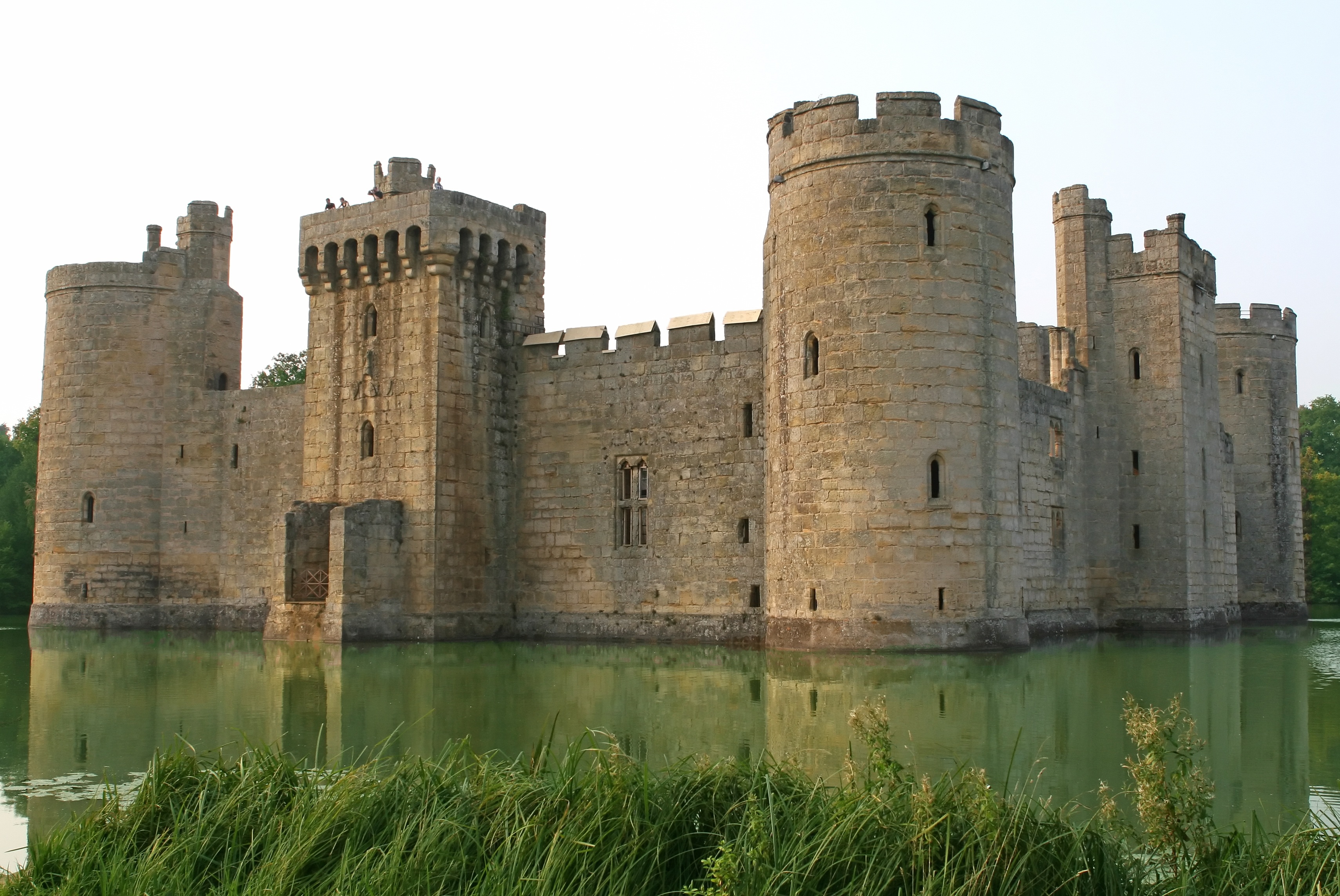
But I didn’t want to get rid of the moat. I’d already written it in as a plot point of Elizabeth and Kaylein’s escape, and I just liked that image of the medieval keep with the moat and drawbridge. So instead of taking it out, I made the fact that it was stupid a part of the story. Everyone who stewards Rosepath Castle is always complaining about how impractical and annoying the moat is. There’s an anecdote about how the water kept draining away until multiple expensive renovations finally fixed it. It’s treated as a cosmetic feature installed by a lord who valued aesthetics over practicality (almost like the author…), something that’s atypical rather than the norm.
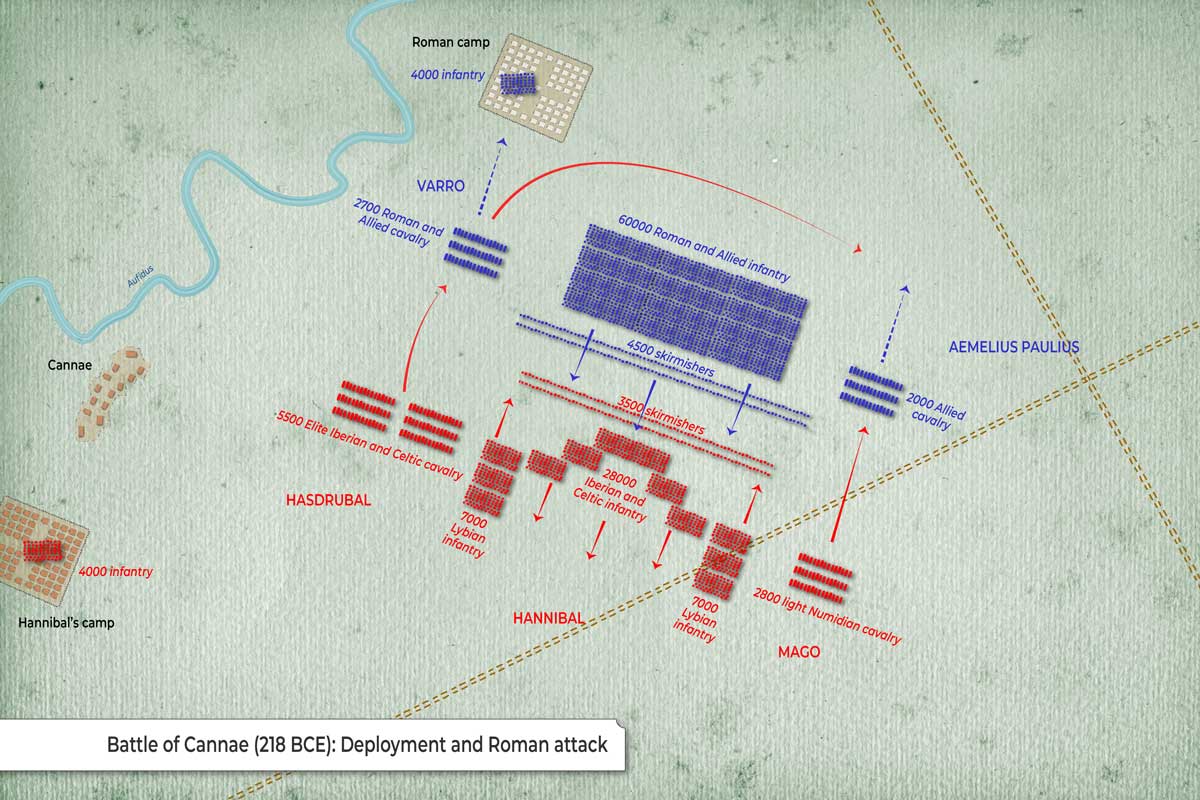
Another topic I had to research was historical warfare. It’s not a big focus in any of my books, but I wanted my few battles to feel authentic. In particular, I wanted to show Francis Cairnford as a cunning strategist when he takes command. The strategy Francis employs during the Battle of Rambirch River is based on the Battle of Cannae from 216 BC, during which the Carthaginian general Hannibal was able to encircle a larger Roman force by allowing his weaker centre to give way so that his veteran troops could close in on the flanks around the advancing army. If you’re not an expert on something, sometimes your best bet is to take an existing historical event and dress it up in different clothing.
Continuing with the warfare theme, I knew I couldn’t write a book about squires and knights like Lavender’s Wolf without researching medieval sword fighting. I like a certain grittiness in my action scenes, a level of detail that makes every moment feel tense and real. To convey this, I had to be able to picture how two swordsmen would actually fight, not with Hollywood choreography, but with the frantic and often awkward energy of soldiers trying to kill each other. This is something that’s very difficult to infer from historical accounts of swordplay considering how vague many of them are.
Fortunately, swords still exist in the modern world, and there’s a lovely niche of Youtube nerds who love making videos about them! These historical European martial arts folks were my salvation. Listening to their descriptions of how medieval swordsmen might have fought helped set the groundwork, but seeing actual examples of experienced martial artists sparring really fixed an image in my mind’s eye of something I could translate to the page.
The more I research, the more grateful I become for the people who are out there recreating historical practices and documenting them. From sword fights to tapestry weaving to castle reconstruction, it’s this video documentary style that I find most useful when it comes to portraying medieval life in fiction. The boundaries of historical fact are important, but the fuzziness that occurs with the passage of time creates a wonderful space for creativity to thrive. Coming up with ideas only to challenge them with research, getting inspired by unknown facts, and crafting plausible contexts around anachronisms are some of my favourite aspects of writing historical fiction.
I wouldn’t call myself a history buff, but I don’t think you need to be to enjoy writing and researching this genre. As long as you have a passion for learning about something new, it’s easy to get enthusiastic about stretching a new canvas over the skeletons our ancestors left behind.
Image credit:
ilovechile-travel, Pixabay: https://pixabay.com/users/ilovechile-travel-14315487/
British Library Royal 12 C XIX f. 45
Viviane M, Pixabay: https://pixabay.com/users/viviane6276-8115285/
Shutterbug75, Pixabay: https://pixabay.com/users/shutterbug75-2077322/
Map: Battle of Cannae (216 BCE) – Deployment & Initial Attack provided by TheCollector.com

